
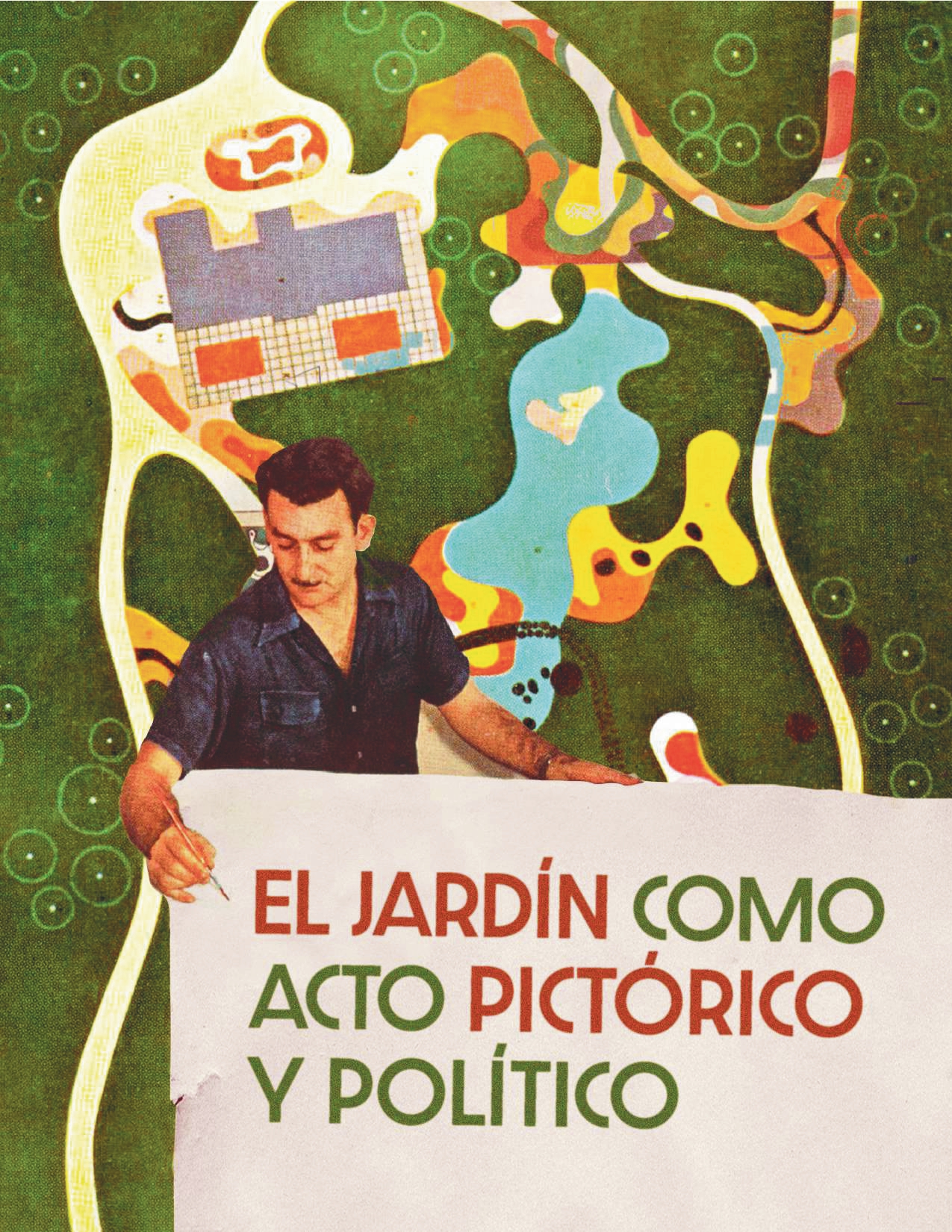
El jardín como un acto pictórico y político Una lectura de la obra paisajística de Roberto Burle Marx
Article Sidebar
Published:
2026-11-13
How to Cite
Vélez Tamayo, Sara Helena. 2026. “El jardín Como Un Acto pictórico Y político: Una Lectura De La Obra paisajística De Roberto Burle Marx”. Pensamiento Humanista Journal 1 (15): 98-110. https://revistas.upb.edu.co/index.php/pensamiento-humanista/article/view/10539.

This work is licensed under a Creative Commons Attribution-NonCommercial-NoDerivatives 4.0 International License.
Downloads
Download data is not yet available.
Societal impact
Main Article Content
Abstract
This photographic essay analyzes the landscape work of Roberto Burle Marx through Arthur Danto’s philosophy of art, particularly through the concepts of the transfiguration of the commonplace, aboutness, and the aesthetic third realm. Through his gardens, Burle Marx transforms everyday elements—plants, water, paths, and soil—into living compositions in which painting, landscape, and experience are intertwined. The text also examines the aesthetic vindication of tropical and native flora as a political and decolonizing gesture against European models of garden design. In addition, it addresses the ecological dimension of his work, shaped by the conservation of species and the understanding of the garden as an archive of living forms. From this perspective, his work blurs the boundaries between art, nature, and everyday life, presenting the garden as a space where beauty, meaning, cultural identity, and ecological awareness converge.
Keywords:
Roberto Burle Marx, Arthur Danto, aesthetics, landscape, decolonization, ecology